Art Gallery / Museum Information - Recommended Exhibitions in September 2026
We present the exhibitions of art galleries and museums in September 2026. In addition to the schedule of events, we will provide you with detailed information such as the works on display. Please check the website of each museum for current opening hours before visiting.
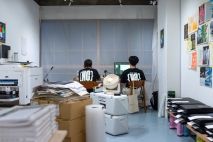
21st Century Museum of Contemporary Art, Kanazawa NEUTRAL COLORS NEW CIRCUIT
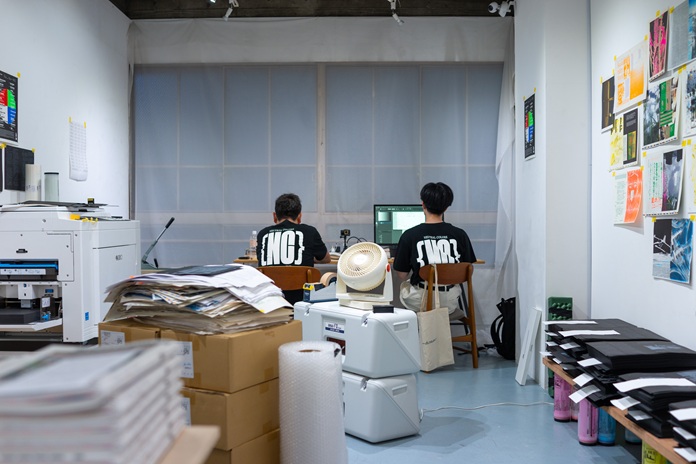
NEUTRAL COLORS began in 2019 from a desire to print, in just the necessary quantity, not the endless ¡Èinformation¡É circulating online but the ¡Èemotions¡É that deserve to remain on paper. It is simultaneously a publisher, the name of its magazine, and a printing and bookbinding workshop. This exhibition introduces the practice itself, in which interviewing, editing, design, layout, printing, binding, and distribution are organically connected. Personal experiences, creative acts, and memories are transformed into distinctive printed pages using handmade processes such as risograph printing. The exhibition offers an opportunity to discover an independent approach to publishing in which the physical qualities of paper and print remain central.

Period: September 15, 2026 – April 18, 2027
Venue: 21st Century Museum of Contemporary Art, Kanazawa, Design Gallery
Hours: 10:00–18:00 (Fridays and Saturdays until 20:00; January 2–3 until 17:00)
Closed: Mondays (open September 21, October 12, October 26, November 23, January 11, March 22), September 24, October 13, October 27, November 24, December 29–January 1, January 12, March 23
Admission: Free
Image Credit: Photo: Ryo Adachi / Courtesy of 21st Century Museum of Contemporary Art, Kanazawa
URL: https://www.kanazawa21.jp/exhibition_en.php

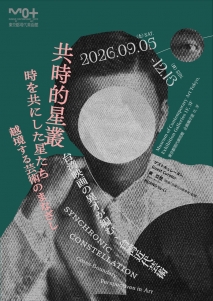
Museum of Contemporary Art Tokyo Synchronic Constellation — Stars That Shared the Same Era: The Gaze of Cross-Boundary Art
Taking the film Le Moulin, which portrays Le Moulin Poetry Society, a modernist poetry group formed in Taiwan in the 1930s, as its point of departure, this exhibition reconsiders modern Taiwan and Japan through diverse forms of art and culture. The film¡Çs director, Huang Ya-li, serves as guest curator. Around 200 works of modern Taiwanese art and 600 related materials are presented alongside approximately 100 works from Japan. Organized in six chapters, the exhibition brings together paintings, sculptures, prints, photographs, and archival materials from more than 15 museums and private collections in Taiwan, offering a rare large-scale introduction to modern Taiwanese art in Japan.

Period: September 5, 2026 – December 13, 2026
Venue: Museum of Contemporary Art Tokyo, Gallery 1F/3F
Hours: 10:00–18:00 (last admission 30 minutes before closing)
Closed: Mondays (open September 21, October 12, November 23), September 24, October 13, November 24
Admission: General 2,000 yen / Students and ages 65+ 1,400 yen / Middle and high school students 800 yen / Elementary school students and younger free
URL: https://synchronic-constellation.com/

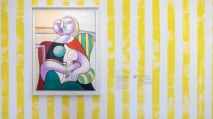
THE NATIONAL ART CENTER, TOKYO Picasso, through the Eyes of Paul Smith
British designer Paul Smith, celebrated for his traditional tailoring and playful use of color, has conceived the art direction for this exhibition inspired by works by Pablo Picasso in the collection of the Musée National Picasso–Paris. The exhibition space is filled with the vivid colors and playful energy characteristic of Smith¡Çs clothing and accessories, offering a fresh setting in which to encounter Picasso¡Çs art. Works spanning Picasso¡Çs career are arranged in a loosely chronological sequence, while Smith¡Çs distinctive approach to color and design creates unexpected connections across periods and styles. The encounter between two highly individual creative minds invites visitors to rediscover Picasso through a spirit of freedom, curiosity, and play.

Period: June 10, 2026 – September 21, 2026
Venue: THE NATIONAL ART CENTER, TOKYO, Special Exhibition Gallery 2E
Hours: 10:00–18:00; Fridays and Saturdays 10:00–20:00 (last admission 30 minutes before closing)
Closed: Tuesdays; closed August 12 (open August 11)
Admission: Adults 2,400 yen / College students 1,400 yen / High school students 1,000 yen; junior high school students and younger free
URL: https://www.nact.jp/english/exhibition_special/2026/picasso_paulsmith/

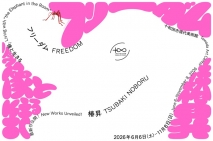
Towada Art Center Tsubaki Noboru: FREEDOM–Living with ¡Èthe Elephant in the Room¡É
Contemporary artist Tsubaki Noboru has long used colossal life forms to question the structures and contradictions of modern capitalist society. For this solo exhibition, Tsubaki turns to the elephant—the world¡Çs largest land mammal—to reconsider everyday actions and ways of thinking that can allow uncomfortable realities to go unseen. A giant balloon work, the Elephant in the Room, occupies the exhibition space, while a special presentation tracing the origins of aTTA extends into central Towada. Through these monumental creatures and related works, the exhibition asks what it means to be ¡Èfree¡É within contemporary society and invites visitors to confront the proverbial elephant in the room.

Period: June 6, 2026 – November 8, 2026
Venue: Towada Art Center
Hours: 9:00–17:00 (last admission 30 minutes before closing)
Closed: Mondays (if Monday is a national holiday, closed the following Tuesday); open August 3 and August 10
Admission: General 1,800 yen / Groups of 20 or more 1,600 yen / Under 18 free
Image Credit: Design: Miyama Yu
URL: https://tinyurl.com/2w7x6tx2

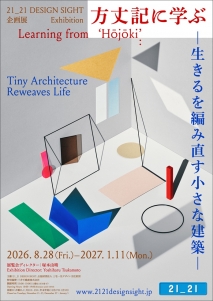
21_21 DESIGN SIGHT Learning from 'Hōjōki': Tiny Architecture Reweaves Life
The 13th-century essay Hōjōki, known in English as The Ten-Foot Square Hut, reflects on the ephemeral nature of life and the essence of human habitation. With architect Yoshiharu Tsukamoto serving as exhibition director, this exhibition takes the small dwelling described by Kamo no Chomei as a starting point for reconsidering contemporary life and the built environment. Architects, designers, artists, and companies develop their own interpretations of the Hōjō-an, using its approximately nine-square-meter scale to explore materials, structures, tools, and ways of living. Research into the nature and daily life described in Hōjōki is presented alongside multiple huts and pathways through the gallery.

Period: August 28, 2026 – January 11, 2027
Venue: 21_21 DESIGN SIGHT Gallery 1 & 2
Hours: 10:00–19:00 (entrance until 18:30)
Closed: Tuesdays (except September 22 and November 3), November 21–23, December 27–January 3
Admission: General 1,700 yen / University students 800 yen / High school students 500 yen / Junior high school students and younger free
URL: https://2121designsight.jp/en/program/hojoki/index.html

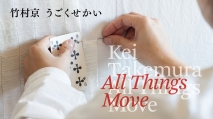
Art Tower Mito Contemporary Art Gallery Kei Takemura: All Things Move
Kei Takemura uses the act of sewing to bring new perspectives to subjects within an ever-changing world shaped by the passage of time, the movement of people and objects, natural disasters, and chance events. Her largest solo exhibition to date begins with representative works from the 2000s and presents pieces she has ¡Èrenovated,¡É together with a new installation addressing natural disaster and restoration. A workshop in the city of Mito also invites participants to consider and practice the meaning of repair. Through her diverse practice, Takemura explores memory and loss as well as the irreversibility of time and action, encouraging reflection on how people engage with events and the memories they leave behind.

Period: July 25, 2026 – October 12, 2026
Venue: Art Tower Mito Contemporary Art Gallery and other locations
Hours: 10:00–18:00 (no admittance after 17:30)
Closed: Mondays (open September 21 and October 12)
Admission: General 900 yen / Groups of 20 or more 700 yen / High school students and younger, ages 70+, eligible disability certificate holders and one accompanying person free
URL: https://tinyurl.com/3vruzbff

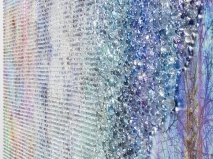
POLA Museum Annex Invisible Garden by Asami Kiyokawa and Kohei Nawa
Invisible Garden is the first two-person exhibition by contemporary artist Asami Kiyokawa and sculptor Kohei Nawa. Conceived following the publication of Kiyokawa¡Çs book Invisible Garden, the exhibition creates a landscape in which tangible and intangible elements—including droplets, spores, microorganisms, plants, animals, memories, time, dreams, and imagination—seem to coexist. Each artist¡Çs works retain their individual presence while resonating with one another to form an organic whole. Works are also presented at POLA GINZA on the first floor, extending the exhibition between two spaces. Visitors can wander through this evolving ¡Ègarden,¡É encountering fragments that invite personal memories, sensations, discoveries, and new forms of dialogue.

Period: September 16, 2026 – November 8, 2026
Venue: POLA Museum Annex / POLA GINZA
Hours: 11:00–19:00 (last admission 18:30); opens at 10:00 from November 6–8
Closed: Open daily throughout the exhibition period
Admission: Free
Image Credit: Asami Kiyokawa | Kohei Nawa, PixCell-Our New World (Detail), 2026, mixed media, approx.1300¡ß9000¡ß85mm. Photo by Nobutada OMOTE
URL: https://www.po-holdings.co.jp/m-annex/en/

Nakanoshima Museum of Art, Osaka Vermeer¡Çs Girl with a Pearl Earring: Dutch masterpieces of the 17th century
This exhibition offers a rare opportunity to encounter masterpieces of seventeenth-century Dutch painting from the collection of the Mauritshuis in The Hague. At its heart is Johannes Vermeer¡Çs world-famous Girl with a Pearl Earring, joined by another Vermeer painting, Diana and her Nymphs. With two of the three works by Vermeer in the Mauritshuis collection traveling to Japan, the exhibition is an exceptional occasion. Other highlights include works by Jan Steen, Paulus Potter, and Maria van Oosterwijck. Through twelve works from the Mauritshuis, visitors can discover the remarkable variety and refinement of Dutch painting during the period in which Vermeer created his celebrated masterpieces.

Period: August 21, 2026 – September 27, 2026
Venue: Nakanoshima Museum of Art, Osaka, 5F Galleries
Hours: 9:30–17:00 (last entry 16:30); open until 20:00 on August 28, September 4, 11, and 18–27
Closed: Open throughout the exhibition period
Image Credit: Johannes Vermeer, Girl with a Pearl Earring, c. 1665, oil on canvas, 44.5¡ß39.0 cm, Mauritshuis © Mauritshuis, The Hague
URL: https://vermeer2026.exhibit.jp/en/

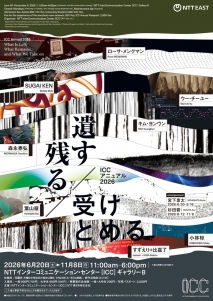
NTT InterCommunication Center [ICC] ICC Annual 2026: What Is Left, What Remains, and What We Take on
ICC Annual explores diverse forms of expression within today¡Çs media environment, including media art. The 2026 edition examines the intersections of history, technology, and media, considering how they participate in the formation of history and memory as well as the act of preserving itself. Works in the exhibition can be approached from perspectives including the structures of selection and exclusion embedded in recording media and the circulation of images within digital environments. At a time when technologies such as generative AI are transforming the production and circulation of information, the exhibition asks what is left behind, what remains, and how people receive and take responsibility for what has been preserved.

Period: June 20, 2026 – November 8, 2026
Venue: NTT InterCommunication Center [ICC], Gallery B, Tokyo Opera City Tower 4F, 3-20-2 Nishishinjuku, Shinjuku-ku, Tokyo
Hours: 11:00–18:00 (admission until 30 minutes before closing)
Closed: Mondays (if Monday is a holiday, the following Tuesday; except September 22), maintenance day August 2
Admission: Adults 800 yen (700 yen) / University students 600 yen (500 yen) / Anechoic room artwork experience 200 yen / Annual passport 2,000 yen. Rates in parentheses are for groups of 15 or more. Free for eligible disability certificate holders and attendants, persons aged 65+, and high school students and younger
Image Credit: Design: Keiji Terai
URL: https://tinyurl.com/3vbwtrtw

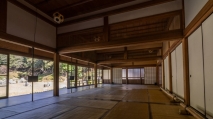
Yamaguchi Center for Arts and Media [YCAM] Yamaguchi Seasonal 2026 / Ryuichi Sakamoto + YCAM Forest Symphony
Presented as part of Yamaguchi Seasonal 2026, Forest Symphony is a sound installation by musician and artist Ryuichi Sakamoto and YCAM. The work generates sound from biological data gathered from trees around the world and is one of YCAM¡Çs representative projects combining artistic practice with media technology. Since its first presentation in 2013, it has been exhibited in various forms in Japan and abroad. For this presentation, the installation is set at Jōei-ji Temple, a historic site in Yamaguchi known for its Sesshū Garden. As summer gives way to autumn foliage and then winter stillness, sound and the changing natural environment resonate in a quietly evolving experience.

Period: July 24, 2026 – December 6, 2026
Venue: Jōei-ji Temple, 2001-1 Miyanoshimo, Yamaguchi City, Yamaguchi
Hours: 10:00–16:30
Closed: Tuesdays (or the following day when Tuesday is a national holiday), August 9, August 12, November 3; additional temporary closures may occur
Admission: Free; separate admission fee required for Jōei-ji Temple
Image Credit: Ryuichi Sakamoto + YCAM, Forest Symphony. Photo: Shintaro Yamanaka (Qsyum!)
URL: https://tinyurl.com/2mdzfv9j

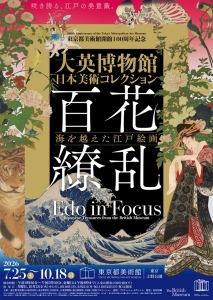
Tokyo Metropolitan Art Museum 100th Anniversary of the Tokyo Metropolitan Art Museum Edo in Focus: Japanese Treasures from the British Museum
Drawing on the British Museum¡Çs collection of some 40,000 works of Japanese art, this exhibition presents selected masterpieces with a particular focus on Edo-period painting and ukiyo-e. Highlights include works returning to Japan from the United Kingdom for the first time, alongside prints by eight celebrated ukiyo-e artists including Utamaro, Sharaku, Hokusai, and Hiroshige. The exhibition also explores the collectors and curators whose enthusiasm for Japanese culture helped build one of the world¡Çs most comprehensive Japanese art collections outside Japan. Through masterpieces, recent research, and the history of the collection, it traces international cultural exchange while opening a new dialogue with Japanese art today.

Period: July 25, 2026 – October 18, 2026
Venue: Tokyo Metropolitan Art Museum, Exhibition Rooms
Hours: 9:30–17:30 (last admission 17:00); Fridays 9:30–20:00 (last admission 19:30)
Closed: Mondays, October 13 (open August 10, September 21, October 12)
URL: https://tinyurl.com/362d2nwu

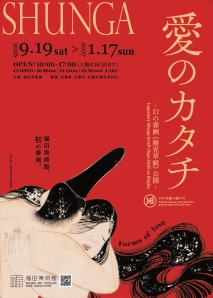
Fukuda Art Museum Forms of Love -Legendary Shunga Scroll Chigo Sōshi on Display
This exhibition explores love, desire, and the deep longing felt for another person through shunga and other works devoted to the theme of love. Its centerpiece is the original Chigo Sōshi, an early 14th-century illustrated scroll depicting intimate relationships between monks and chigo, shown to the general public for the first time. Long known primarily through copies and books, the work has been regarded as a legendary or ¡Èphantom¡É masterpiece. Other highlights include a copy by Tani Bunchō of Koshibagaki Sōshi, hand-painted shunga, and Katsushika Hokusai¡Çs celebrated Nami Chidori. Works associated with love by artists such as Uemura Shoen and Kaburagi Kiyokata further broaden the exhibition¡Çs perspective.

Period: September 19, 2026 – January 17, 2027
Venue: Fukuda Art Museum
Hours: 10:00–17:00 (last entry 16:30)
Closed: October 20, December 15, December 30–January 1
Admission: General 1,500 yen (groups 1,400 yen) / High school students 900 yen (groups 800 yen) / Guests with disabilities and one accompanying person 900 yen each (groups 800 yen) / Admission restricted to guests aged 18 and over
URL: https://fukuda-art-museum.jp/en/exhibition/202607011995

The Museum of Modern Art, Kamakura Annex Yamamuro Shinji¡Çs Potato Prints ¡ÈHistoires Naturelles in Kamakura¡ÉFrom the Museum Collection: In Everyday Life
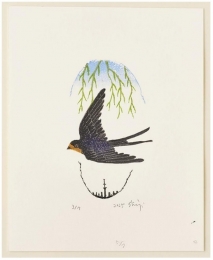
For more than fifty years, Yamamuro Shinji, born in 1939, has developed a distinctive printmaking practice using potatoes as printing blocks. Because the raw blocks can be used for only a few hours, each image is built through the careful layering of temporary impressions. His subjects include plants, insects, and birds encountered around Kamakura, reflecting both an affectionate attention to everyday nature and a sustained exploration of this unusual medium. Alongside earlier potato prints and books for which Yamamuro created designs and bindings, the exhibition presents the new 100-work series Words of Shimura Fukumi: Hyakuyōbako. The works reveal the remarkably rich visual world that can emerge from a small, ordinary potato.

Period: May 30, 2026 – September 27, 2026
Venue: The Museum of Modern Art, Kamakura Annex
Hours: 9:30–17:00 (last admission 16:30)
Closed: Mondays (except July 20 and September 21)
Admission: General 700 yen / Under 20 and students 550 yen / Ages 65+ 350 yen / High school students 100 yen; junior high school students and younger and eligible disability certificate holders with one caregiver free
Image Credit: Yamamuro Shinji, Swallow, 2025, potato print on paper, collection of the artist. Photo: Shizuka Suzuki
URL: https://tinyurl.com/3zth2mvb

The Museum of Modern Art, Hayama Tasogare, Kawatare: ¡ÈIn-Between¡É in Contemporary Art
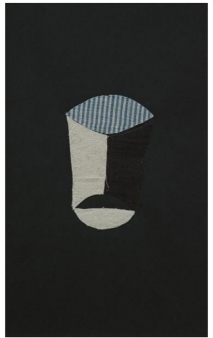
Tasogare and kawatare are archaic Japanese words associated with the hours when light and darkness gently merge and the outlines of things become uncertain. Focusing on this sense of transition and ¡Èin-betweenness,¡É the exhibition traces ambiguous images and sensations in twentieth-century and contemporary art. Works include Samiro Yunoki¡Çs collage Night Painting, made from old fabrics; Kazuo Okazaki¡Çs HISASHI, poised between light and shadow; and photographs by Hiroshi Sugimoto and Daido Moriyama. Many recently acquired works are also presented for the first time. Through shifting boundaries between light and darkness, memory, subject and object, the exhibition reveals diverse expressions that emerge in moments and spaces of uncertainty.

Period: September 12, 2026 – November 15, 2026
Venue: The Museum of Modern Art, Hayama, Galleries 3b and 4
Hours: 9:30–17:00 (last admission 16:30)
Closed: Mondays (except September 21 and October 12)
Admission: General 250 yen (150 yen) / Under 20 and students 150 yen (100 yen) / Ages 65+ 100 yen / High school students 100 yen
Image Credit: Samiro Yunoki, Night Painting (16), 2005, Collection of The Museum of Modern Art, Kamakura & Hayama. Photo: Norihiro Ueno
URL: https://tinyurl.com/3mnpfaps

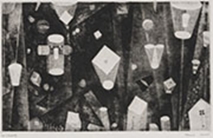
The Museum of Modern Art, Hayama Copperplate Print Artist Komai Tetsuro: Constellations on the Palm of His Hand
Marking fifty years since the death of Tetsuro Komai (1920–1976), a major figure in the history of Japanese printmaking, this exhibition traces his work from his early years through the end of his career. Centered on the Yoshiharu Fukuhara Collection at the Setagaya Art Museum, it includes rarely shown early oil paintings and original illustrations for the children¡Çs story The Child Who Chases Dreams, presented publicly for the first time. Works by artists who influenced Komai, including Odilon Redon, are shown alongside copper plates, tools, photographs, and other materials, revealing both the breadth of his creative practice and the personality behind his poetic prints.

Period: September 12, 2026 – November 15, 2026
Venue: The Museum of Modern Art, Hayama
Hours: 9:30–17:00 (last admission 16:30)
Closed: Mondays (except September 21 and October 12)
Admission: General 1,200 yen / Under 20 and students 1,050 yen / Ages 65+ 600 yen / High school students 100 yen / Junior high school students and younger free
Image Credit: Tetsuro Komai, Fleeting Illusion, 1951, sandpaper etching, Setagaya Art Museum, Yoshiharu Fukuhara Collection ©Ari Komai 2026/JAA2600113
URL: https://tinyurl.com/ysw2nx5t

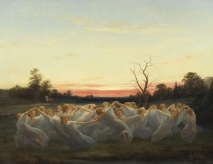
Aichi Prefectural Museum of Art Masters of Swedish Painting from Nationalmuseum, Stockholm
This exhibition is the first in Japan devoted to tracing the development of the Golden Age of Swedish painting around the turn of the twentieth century. From the late 1870s, young Swedish artists traveled to France, where they encountered Realism, Naturalism, and plein-air painting. Returning home, they turned their attention to the distinctive landscapes and everyday life of Sweden. With the special cooperation of Nationalmuseum, Stockholm, approximately 80 paintings reveal how artists transformed quiet domestic moments and the beauty of Nordic nature into poetic images. The exhibition introduces a rich period of Swedish art through themes including nature, light, and the sparkles of everyday life.

Period: July 9, 2026 – October 4, 2026
Venue: Aichi Prefectural Museum of Art, Aichi Arts Center 10F
Hours: 10:00–17:00 (Fridays until 20:00; admission until 30 minutes before closing)
Closed: Mondays (except July 20, August 10, September 21), July 21, September 24
Image Credit: Nils Blommér, Ängsälvor, 1850, oil on canvas, Nationalmuseum. Photo: Cecilia Heisser / Nationalmuseum
URL: https://swedishpainting2026.jp/english.html

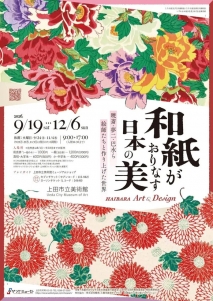
Santomyuze Ueda City Museum of Art HAIBARA Art & Design: The Beauty of Japan Woven in Washi
Founded in Nihonbashi, Tokyo, in 1806, Haibara has specialized in fine Japanese washi paper for more than two centuries. This exhibition focuses primarily on paper goods produced from the Meiji period through the early Showa era in collaboration between successive Haibara proprietors and leading artists of their time. More than 300 objects are presented, including brilliantly designed chiyogami paper by artists such as Kawanabe Kyōsai and Kawabata Gyokushō, refreshing fan designs by Kawase Hasui, calendars, illustrated envelopes, and small gift envelopes. Together, these works reveal how Haibara has carried forward the traditions of Japanese paper culture and woodblock printing while bringing refined beauty into the routines of everyday life.

Period: September 19, 2026 – December 6, 2026
Venue: Santomyuze Ueda City Museum of Art
Hours: 9:00–17:00
Admission: General 1,200 yen / High school, vocational school and university students 600 yen / Elementary and junior high school students 400 yen
URL: https://tinyurl.com/5n87kpt2


Return to top of page